Full-arch rehabilitation of the upper jaw with implants and monolithic zirconia
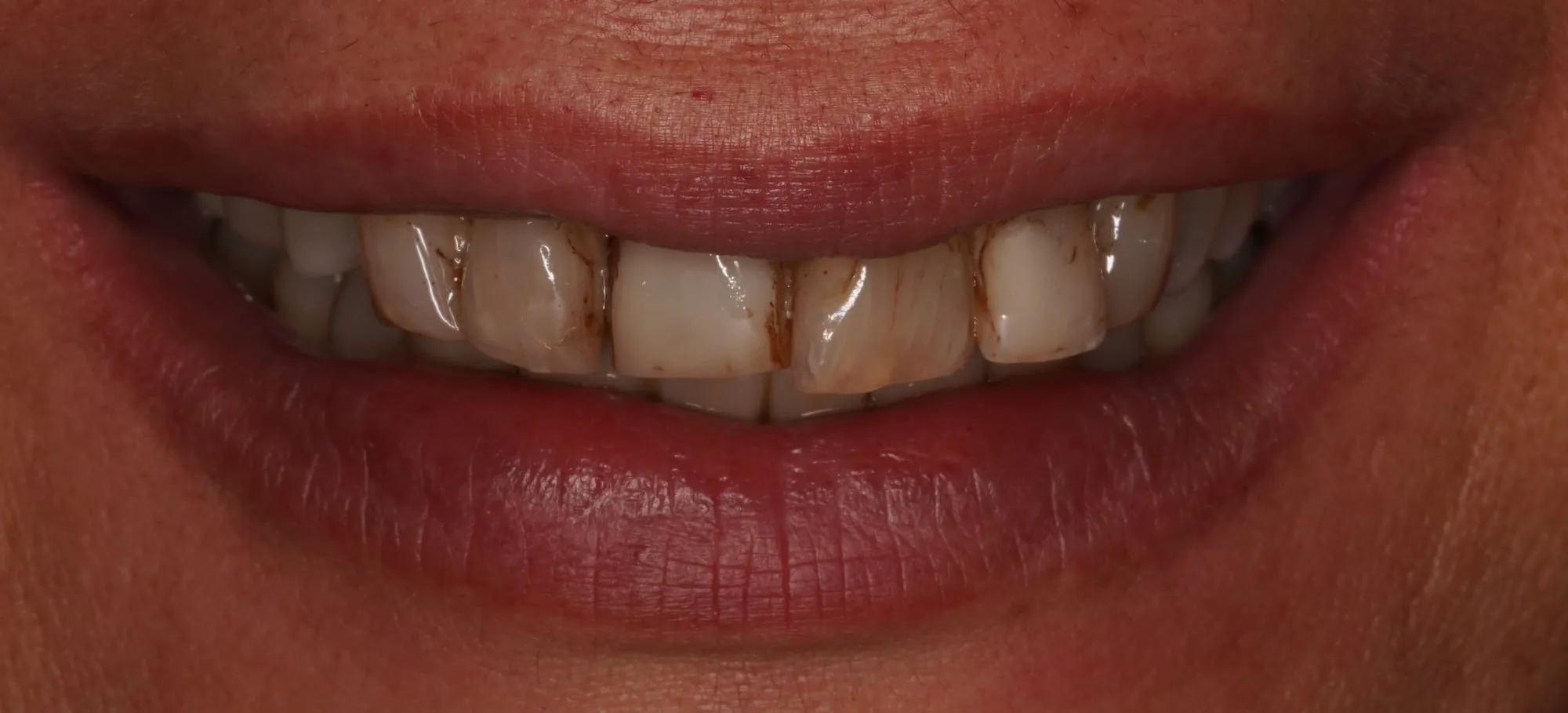
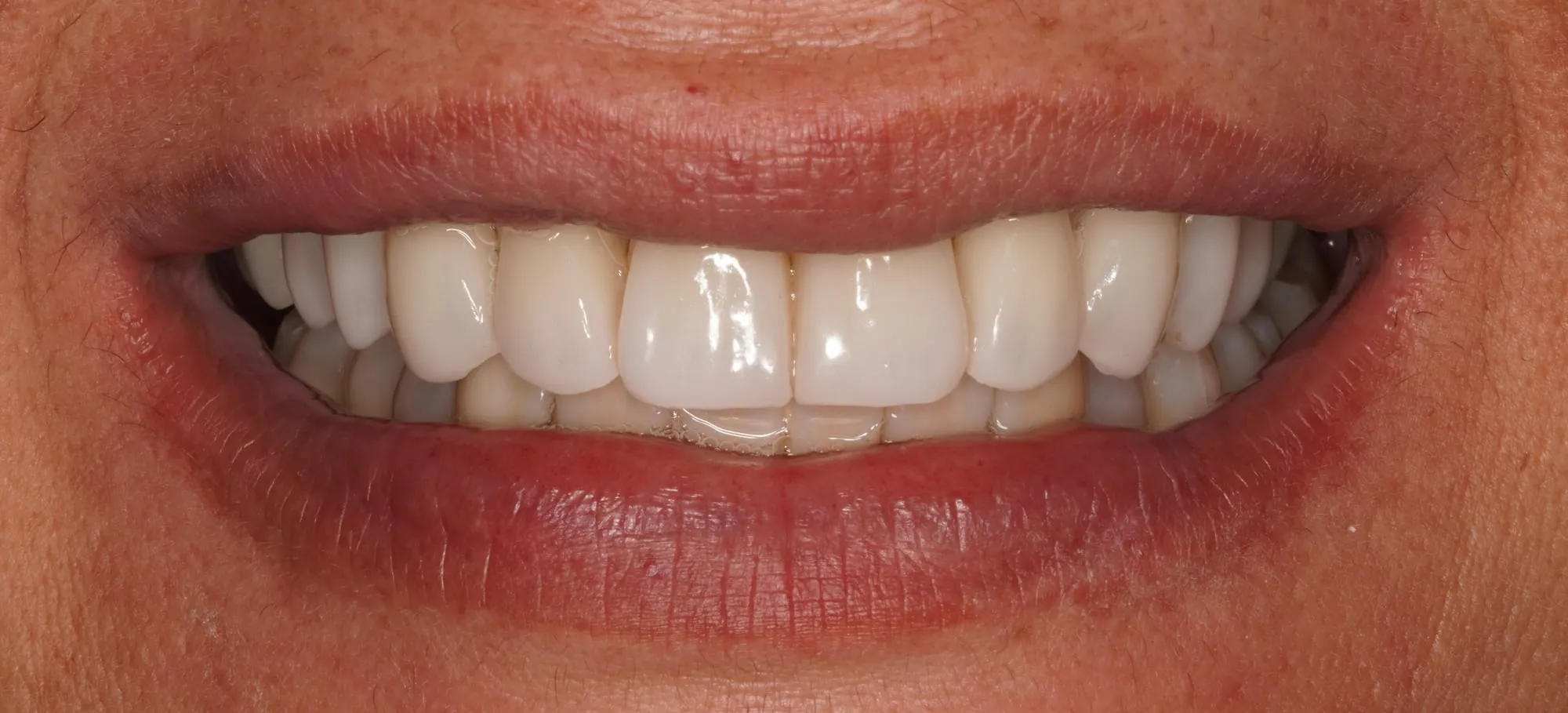
A full-arch rehabilitation of the upper jaw, planned to restore function and appearance together. At the outset there was active periodontal disease, old restorations that had discoloured over time, and a loss of support towards the back of the mouth. Treatment was carried out in stages, combining implants and fixed prosthetics.
The starting point
The front teeth were worn and discoloured, and old restorations had darkened along their edges. At the same time, periodontal disease had affected the support of the teeth. Beyond appearance, chewing had been affected too, with missing support in the posterior of the upper jaw.
Planning the treatment
The first step was to stabilise the gums and bring the periodontitis under control — without healthy supporting tissue, no restoration lasts. From there we planned the whole rehabilitation digitally, so that the position of the implants and the final shape of the teeth were decided from the start.
Implants in the posterior
Six MegaGen implants were placed in the posterior of the upper jaw — on the right, across the premolar and molar region, and on the left, in the molar region. The implants restored the support that had been lost and gave a stable foundation for the fixed restoration.
Monolithic zirconia crowns
The remaining upper teeth were prepared for full-coverage monolithic zirconia crowns. It is a metal-free, biocompatible material with high strength and natural translucency. Shade and shape were chosen to sit in harmony with the face and give a natural result.
The result
The final result is a stable, even smile, with healthy gums and none of the old staining. Just as important as the appearance, chewing function was restored.
Every case is different. These photographs are published anonymously and with the patient’s consent, and results vary from case to case.